Technology, Research and Development
Technology with purpose.
Innovation is part of who we are, but it is always guided by intent. Every advancement we invest in exists to make your treatment more comfortable, more precise, and easier to understand.
Technology Meets Thoughtful Dentistry
Why We Invest
Contemporary dentistry, thoughtfully chosen.
Dentistry moves quickly. Materials improve, techniques are refined, and what was once remarkable becomes the everyday standard. We choose to move with it, deliberately and continuously, because the alternative is to quietly fall behind.
That commitment is not about owning equipment. It is about what the equipment allows us to give you: a treatment planned with precision, explained with clarity, and delivered with as little disruption to your day as possible.
So our dentists continue to learn. They attend and present at conferences in Australia and overseas, they observe advanced surgical work first-hand, and they test new techniques carefully before offering them to patients. What we adopt, we adopt because the evidence supports it, not because it is new.
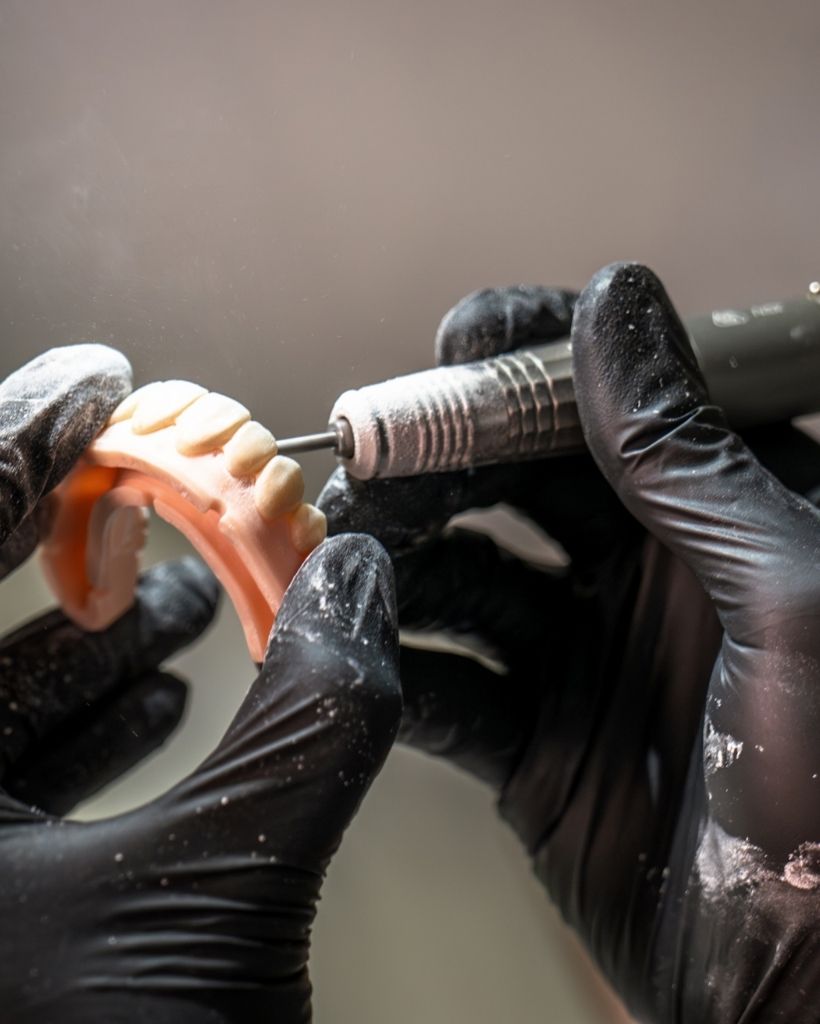
Every advancement we invest in exists to serve our patients, making treatment more seamless, more predictable, and more comfortable.
How It Works
Traditional dentistry passes your case between disconnected steps, and detail is lost at every handover. A digital process keeps your treatment as a single, accurate record from beginning to end. That continuity is where the precision comes from, and it is what allows us to guide you through each stage with confidence.
Designed Around You
Precision you can feel, and clarity you can see.
Technology earns its place here only when it improves your experience. This is what it changes in practice.
Greater comfort
Digital scanning replaces most impression trays, and efficient instrumentation shortens the longest appointments. Less time in the chair, and far less to tolerate while you are in it.
Fewer visits
Designing and producing on site removes laboratory queues and courier delays from your treatment, so the process moves at a pace that suits your life.
Informed decisions
Your images are shown to you and explained in plain language, on a screen beside you. Understanding your own mouth should never require taking someone’s word for it.
A result you have shaped
Digital Smile Design lets you see and discuss the proposed outcome before treatment begins, so the plan reflects what you actually want.
Confidence in surgery
Implant positions are planned against your 3D imaging and transferred precisely using a printed guide, so decisions are made calmly in advance rather than under pressure on the day.
A record that lasts
Your scans and images build a dated history of your mouth, allowing us to notice small changes early and care for you attentively over many years.
Purpose-Built
The tools behind a calmer appointment.
A list of equipment proves very little on its own. These are the investments we have made, and more usefully, what each one gives you.
Digital scanning, across the practice. Four intraoral scanners means scanning is never the bottleneck, so your appointment is arranged around you rather than around equipment.
3D imaging with lateral cephalogram. Cone beam imaging at a fraction of the dose of a medical CT, captured here rather than somewhere else, sparing you a separate appointment.
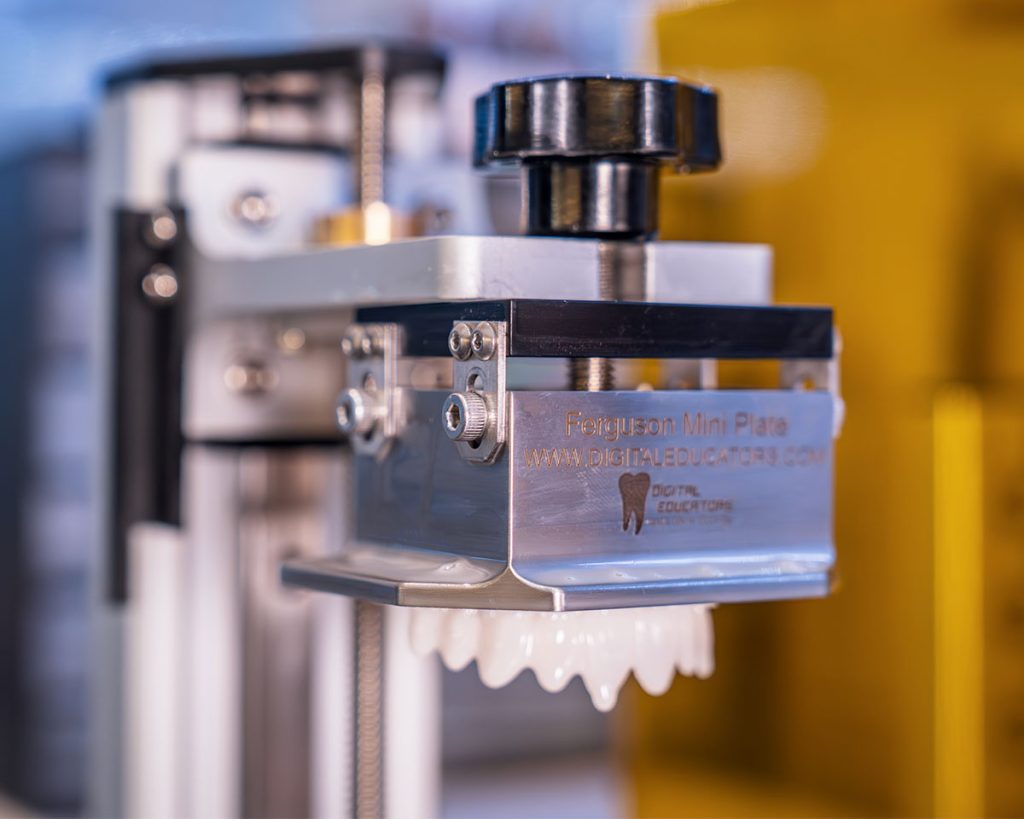
In-house 3D printing and milling. Surgical guides, models, provisional teeth and certain restorations, designed and produced under our own roof.
Digital radiography. Lower dose than film, and an image on screen beside you within seconds, so we can look at it together.
Contemporary endodontics. Rotary instrumentation shapes root canals more consistently and more quickly, which makes a long appointment noticeably easier.
Clinical photography. Professional documentation of every stage, guiding your smile design and communicating fine detail of shade and shape to our technicians.
Comfort in the chair. A screen above every chair with Netflix. A small thing beside the imaging, and for an anxious patient, often the thing that matters most.
The systems you never see. Secure digital records and gentle reminders that carry your information between our clinicians, so you are never asked to tell your story twice.
Where Art Meets Science
Chosen for the evidence, not the price.
An implant is a titanium root that must integrate with living bone. That process begins the moment the implant surface meets the site, which makes the surface itself one of the most consequential choices in the whole treatment.
We place Neodent, part of the Straumann Group, and specifically the Acqua surface. Acqua is hydrophilic, meaning it draws blood to it on contact rather than repelling it. That early, intimate contact between blood and implant is the foundation the healing process is built on, and surfaces of this kind are designed to support bone integration through the earliest and most important weeks.
We are equally considered about everything that sits above it: the components, the ceramics, and the technicians who craft the final result. Suitability and timing are always assessed individually at your consultation, and where a slower, staged approach is the better decision for you, that is what we will recommend.
Research and Development
Knowledge, shared.
Continuing education is a professional requirement. We treat it as something considerably more interesting than that.
Members of our team lecture and lead hands-on training for other dentists, including implant and full-arch programs attended by practitioners from across Australia. Teaching a technique to experienced colleagues is a demanding way to hold yourself to a standard, and it keeps our own thinking careful and current.
Within the practice, that same spirit shapes how we work. Senior clinicians mentor newer ones, cases are reviewed together, and new materials and methods are evaluated properly before they become part of the care we offer. Innovation matters to us, but so does the patience to be certain first.